Choosing the right size backpack can make or break your backpacking trip. You might be wondering, how many liters (L) is good for a backpacking backpack?
Picking a pack that’s too small means leaving behind essentials. Too big, and you’ll carry unnecessary weight that tires you out. Finding the perfect balance is key to staying comfortable and prepared on the trail. Keep reading, and you’ll discover exactly what size works best for your adventure, so you can pack smart and travel light.
Choosing Backpack Capacity
Choosing the right backpack capacity is key for a good backpacking trip. The size affects how much you can carry and how comfortable you feel. Pick a pack that fits your trip length and gear needs. Too big or too small can cause problems on the trail.
Think about what you need to bring and how long you will be out. Your backpack should hold all essentials without feeling heavy or bulky. Let’s explore factors that influence backpack size and the difference between daypacks and multi-day packs.
Factors Influencing Size
Trip length is a major factor in choosing backpack size. Short trips need less space, long trips need more. Weather and season also matter. Cold weather means more gear and clothes. Warm weather needs less space for bulky items.
Your personal style counts too. Some hikers carry light, others bring extra gear. Food and water storage needs affect size. Also, consider if you share gear with others. Choose a size that fits your unique needs.
Daypacks Vs Multi-day Packs
Daypacks are small and light. They usually hold 15 to 30 liters. Perfect for short hikes or city trips. They carry water, snacks, and a few extras. Easy to carry and less tiring.
Multi-day packs are larger. They hold 40 to 70 liters or more. Made for camping trips that last several days. They fit tents, sleeping bags, food, and clothes. Designed for comfort and support during long hikes.
Backpack Sizes Explained
Choosing the right backpack size matters for your trip. The size you need depends on the trip length and what you carry.
Backpacks come in different sizes. Each size fits different needs. Understanding these sizes helps you pick the best one.
Small Backpacks (10-30l)
Small backpacks hold 10 to 30 liters. They are light and easy to carry. Ideal for day trips or short hikes.
Carry water, snacks, a jacket, and small gear. Perfect for those who travel light and fast.
Medium Backpacks (30-50l)
Medium backpacks have 30 to 50 liters capacity. Good for overnight trips or weekend adventures.
They fit clothes, food, and some camping gear. A great balance between space and weight.
Large Backpacks (50-80l)
Large backpacks hold 50 to 80 liters. Suitable for longer trips lasting several days.
Carry more clothes, food, and camping equipment. Ideal for those who need extra space.
Extra Large Backpacks (80l+)
Extra large backpacks hold over 80 liters. Best for extended trips or group camping.
They can carry heavy and bulky gear. Choose these only if you need lots of space.
Trip Duration And Pack Size
Choosing the right backpack size depends on how long your trip lasts. Trip duration affects how much gear and supplies you carry. A pack too big or too small can make your trip harder. Understanding pack size helps you pack smart and stay comfortable.
Short Day Trips
Day trips need small backpacks. Around 10 to 20 liters is enough. Carry snacks, water, and a light jacket. No need for heavy gear or big packs. Light and simple is best for short hikes.
Weekend Trips
Weekend trips need more space. Backpacks between 30 and 50 liters work well. You need room for clothes, food, and a sleeping bag. Packing extra layers and a small tent is common. This size balances comfort and carry weight.
Extended Multi-day Trips
Long trips require larger backpacks. Usually, 50 to 70 liters or more. You must carry food for several days and camping gear. Extra space for cooking tools and safety items is important. Bigger packs help you stay prepared and comfortable.
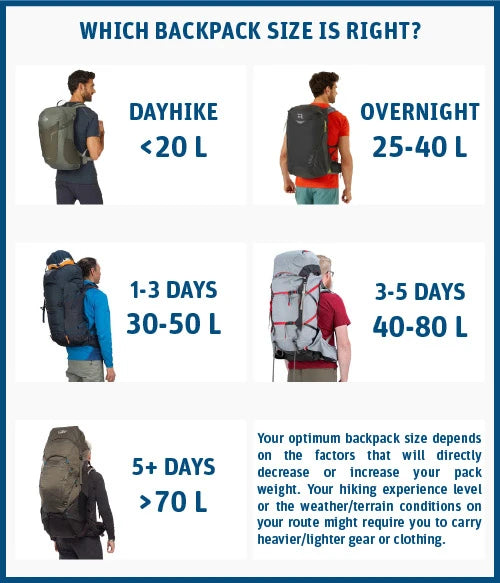
Credit: k2.com.au
Packing Essentials And Space
Packing for a backpacking trip needs balance. You want enough space for essentials without carrying too much weight. Choosing the right backpack size depends on what you plan to bring. Understanding packing essentials helps decide how many liters your backpack should hold. Let’s explore the key items and how much room they need.
Clothing And Gear
Clothing takes up a lot of space. Pack lightweight, quick-dry clothes to save room. Layers are smart for changing weather. Include a rain jacket and warm clothes for cold nights. Gear like a sleeping bag, tent, and stove also need space. Compact gear fits better and keeps your pack light.
Food And Water
Food is essential but bulky. Choose dehydrated meals to reduce weight and size. Carry snacks like nuts and energy bars for quick fuel. Water takes up space and adds weight. Use a hydration bladder or bottles. Consider a water filter to refill from natural sources, saving space.
Safety And Emergency Items
Safety gear is vital but small. Carry a first aid kit, map, and compass. A headlamp or flashlight fits easily and is necessary. Pack a multi-tool for repairs and emergencies. These items need little space but keep you safe and prepared.
Weight Vs Volume Trade-offs
Choosing the right backpack size means balancing weight and volume. A bigger backpack holds more but weighs more even when empty. A smaller pack is lighter but limits what you can carry. Finding the right size depends on your trip length and gear needs.
Lightweight Packing Tips
Pack only what you need. Choose items that serve more than one purpose. Use lightweight gear to save weight. Avoid packing heavy items that are not essential. Organize gear to fit efficiently in your backpack.
Balancing Comfort And Capacity
A backpack that is too large can feel heavy and bulky. A pack that is too small may force you to leave important items behind. Look for a backpack with good padding and support. Adjust straps to spread weight evenly. Balance volume with comfort for a better experience.
Specialized Backpack Types
Specialized backpacks serve different needs and activities. Choosing the right size depends on the type of backpack you need. Each type offers unique features and volume capacities. Understanding these helps pick the best backpack for your adventure.
Ultralight Backpacks
Ultralight backpacks focus on weight savings. They usually hold 30 to 45 liters. This size suits short trips or minimalist hikers. The design avoids extra pockets and heavy materials. It keeps your load light and simple.
Technical Hiking Packs
Technical hiking packs support demanding trails and gear. Their volume ranges from 40 to 60 liters. These backpacks have special compartments for tools and equipment. They provide stability and comfort on rough terrain. Ideal for climbers or long day hikes.
Travel And Trekking Backpacks
Travel and trekking backpacks offer larger capacities. Sizes often range from 50 to 80 liters. They fit clothing, food, and camping gear for multi-day trips. These packs have padded straps and multiple pockets. Designed for comfort during long journeys.
Fitting And Comfort
Choosing the right backpack size is only part of the story. Fitting and comfort play a big role in how well your backpack works on the trail. A good fit helps you carry your gear without pain or strain. Comfort lets you enjoy your hike, not suffer through it.
Adjusting Straps And Support
Straps are key to a comfy backpack. Shoulder straps hold the pack close to your body. Adjust them so the pack sits high on your back. Tighten the chest strap to keep the load steady. Hip belts carry most of the weight. Make sure the belt fits snugly around your hips, not your waist. Properly adjusted straps stop the pack from bouncing or shifting. This reduces fatigue and prevents soreness.
Sizing For Body Type
Backpacks come in different sizes for different bodies. Measure your torso length to find the right frame size. A pack too long or too short will cause discomfort. Wider hips need wider hip belts for better support. Narrow shoulders need slimmer shoulder straps to avoid slipping. Some brands offer packs designed for men, women, or unisex. Pick a pack that matches your body shape for the best fit and comfort.
Credit: www.rei.com
Popular Backpack Brands And Models
Choosing the right backpack is key for a good trip. Many brands make backpacks with different sizes and features. Knowing popular brands helps you pick the best one for your needs.
Each brand offers models designed for different types of trips. Some focus on comfort, others on durability or weight. This variety makes it easier to find a backpack that fits your style.
Osprey Backpacks
Osprey is known for its strong and comfortable backpacks. Their packs come in many sizes, from small daypacks to large trekking backpacks. Popular models include the Atmos AG and Aether AG series. These have good ventilation and support for long hikes.
Deuter Backpacks
Deuter backpacks are popular for their simple design and reliability. They offer backpacks that suit beginners and experienced hikers. The Deuter Aircontact series has strong frames and good padding. These backpacks carry heavy loads with less strain.
Gregory Backpacks
Gregory backpacks focus on fit and comfort. They use adjustable straps to match different body shapes. The Baltoro and Deva models are favorites for multi-day trips. These packs balance weight and storage well.
Rei Co-op Backpacks
REI Co-op offers backpacks with great value for the price. Their models suit casual hikers and serious backpackers. The Flash and Traverse series are light and easy to use. These packs are good for shorter trips.
The North Face Backpacks
The North Face makes backpacks that are tough and weather-resistant. The Banchee and Terra series are popular among outdoor lovers. These backpacks have smart pockets and durable materials for rough conditions.

Credit: southeastasiabackpacker.com
Frequently Asked Questions
What Size Backpack Is Best For Multi-day Trips?
A 50 to 65-liter backpack is ideal for multi-day trips. It holds enough gear without being too bulky. This size balances comfort and capacity for most backpackers.
How Many Liters Do Daypacks Usually Have?
Daypacks typically range from 15 to 30 liters. They are perfect for short hikes or daily use, carrying essentials like water, snacks, and extra clothing.
Should I Choose A Bigger Backpack For Longer Trips?
Yes, longer trips often require backpacks of 60 liters or more. Larger packs accommodate extra gear, food, and clothing for extended stays.
Can A 40l Backpack Work For Overnight Camping?
A 40-liter backpack can work for overnight camping if packed efficiently. It suits minimalist campers who carry lightweight gear and fewer items.
Conclusion
Choosing the right backpack size helps you carry what you need comfortably. A 30-50L backpack works well for most trips. Small backpacks suit short hikes or light packing. Bigger bags fit longer trips or extra gear. Remember, weight matters more than size alone.
Pack smart to avoid heavy loads. Comfort and fit are key for happy hiking. Think about your trip length and what you must bring. This way, your backpack feels just right every time.

